Quick Links

Friday, April 27, 2018

Fluoride Toothpaste: Right for All Ages

Fluoride Toothpaste: Right for All Ages

Plaque, a film of bacteria that forms daily on teeth and gums, can cause gum disease and tooth decay. Brushing with toothpaste helps remove plaque. But what kind of toothpaste is best for your child?

Many toothpastes contain fluoride, a fluorine compound that also helps prevent tooth decay by inhibiting the loss of minerals from tooth enamel and encouraging remineralization of teeth. It also affects the bacteria that cause cavities by discouraging the acid attacks that break down the tooth.

But ingesting fluoride can be bad for your child. Too much fluoride may cause a condition called fluorosis. A mild case of fluorosis can cause cosmetic damage to the enamel of the child’s developing teeth, while more severe cases can cause the enamel to become pitted with brown discoloration.

The American Academy of Pediatric Dentistry has stated that the use of fluoride is safe and highly effective. The most effective way for children to get fluoride involves frequent topical application of low doses. That means using fluoride toothpaste, even for young children.

If your child is less than two years old, start brushing your child’s teeth twice a day when the first tooth appears. Apply a tiny smear of fluoridated toothpaste to your child’s soft toothbrush. Brush all surfaces of the teeth and gums.

If your child is two to six years old, use a “pea-sized” dollop of fluoridated toothpaste. Be sure not to use too much toothpaste—studies have shown that parents often underestimate the amount of toothpaste they put on their child’s toothbrush. Follow these toothbrushing guidelines:
  • Brush your child’s teeth until the child is old enough to brush properly.
  • Once your child is old enough, closely supervise your child’s toothbrushing.
  • Limit toothbrushing to twice a day.
  • Use an appropriately sized, soft toothbrush.
  • Teach your child to spit out toothpaste rather than swallowing it.
  • Minimize or eliminate rinsing after brushing.

Fluoride toothpaste, when used properly, can help protect your child’s teeth from decay and cavities. Be sure to store toothpaste in a place that is inaccessible to your child to prevent him or her from consuming excess toothpaste.

If you have questions about fluoride toothpaste, click here to schedule an appointment with Dr. Jared. Or give us a call at (509)-891-7070.

Friday, April 13, 2018

First Aid for Your Child’s Tooth Injury

First Aid for Your Child’s Tooth Injury

Nearly half of all children suffer a tooth injury during childhood, most often from falls, traffic accidents, fighting and sports. Taking immediate action can help lead to a better outcome after treatment. Be prepared to tell us how and when the injury occurred. After Dr. Jared examines your child, he may recommend imaging, if necessary, to determine the extent of the injury and develop a treatment plan. 

Treatment varies depending on whether the injury involves a primary tooth or a permanent tooth. Loose or dislocated permanent teeth are always emergency situations. Here are some of the most common childhood tooth injuries and their treatments:
  • Dislocated or loose primary tooth: The goal of treatment for this common injury is to prevent future damage to the permanent teeth. A loose baby tooth left in place sometimes heals without treatment. If it is very loose, your dentist may remove the tooth to prevent it from falling out and becoming a choking hazard. If knocked out completely, the tooth should not be replaced into the gum. This could cause damage to the underlying permanent tooth.
  • Broken primary tooth: A dentist should examine the child as soon as possible to see if there is damage to the tooth’s nerves or blood vessels. Treatment may include smoothing the rough edges of the tooth, repairing it with resin material, leaving it in place or removing it.
  • Dislocated permanent tooth: Try to replace the dislocated tooth in its socket within 15 minutes of the injury, then call the dentist. If you are unable to replace it, place the tooth in cold milk and get to the dentist right away. The tooth usually survives if stored in milk and replaced within one hour. Teeth stored dry and reimplanted after one hour rarely survive.
  • Loose permanent tooth: Prompt dental treatment usually returns the tooth to its correct position. Sometimes, the dentist may use stitches or splints to hold the tooth in place until it heals.
  • Broken permanent tooth: These can usually be repaired successfully, especially if treated within two days of the injury. Tooth fragments can sometimes be reattached and should be stored in tap water until you get to the dentist. If the fragments cannot be found or reattached, the dentist may repair the tooth with a resin material.

Depending on the injury, your child’s dentist may prescribe pain medication or antibiotics. Eating a diet of soft foods and maintaining good oral hygiene with twice daily brushing and regular flossing assists in recovery. With your immediate first aid and prompt professional care, most childhood tooth injuries heal successfully and rarely lead to complications.

Give us a call at (509)-891-7070 to schedule today!

Friday, March 30, 2018

Fillings Don’t Have to Be Noticeable

Fillings Don’t Have to Be Noticeable

Although parents don’t want to hear that their child needs a dental filling, restorations are often necessary to treat a tooth that has experienced decay. This simple procedure restores your child’s tooth to its normal shape and function.

Today, dentists have options when it comes to selecting what material to use for fillings. While metal amalgam has been used to fill teeth for more than a century, we increasingly use tooth-colored composite resins for this procedure.

The advantages of using composite fillings include the following:
  • Composite fillings blend in well because they match the color of teeth.
  • Composite fillings bond to the teeth, helping to seal them and prevent additional decay.
  • Some composite fillings release fluoride, contributing to the prevention of decay.
  • Composite fillings can usually be placed in a hole smaller than that needed for amalgam fillings.
Composite fillings are durable. Because everyone wants healthy-looking white teeth, composite fillings are usually the material of choice for the front teeth; they can also be used on the back teeth.

One of the difficulties of placing a composite filling in a child’s mouth is that the tooth must be kept clean and dry throughout the procedure. Thus, the process takes a little longer than placing an amalgam filling, but we can keep most children still and comfortable during the procedure.


Of course, the ideal filling is no filling at all. That is why we stress the importance of proper brushing and flossing, as well as regular visits to KiDDS Dental for checkups and cleanings. If your child is due for a dental visit—or if you feel he or she needs some help or encouragement with dental hygiene—call our office for an appointment. We will work with you and your child to improve dental hygiene and reduce the chances that he or she will need any fillings—composite or amalgam—at all.

Click here to schedule an appointment with Dr. Jared. Or give us a call at (509)-891-7070.

Thursday, March 22, 2018

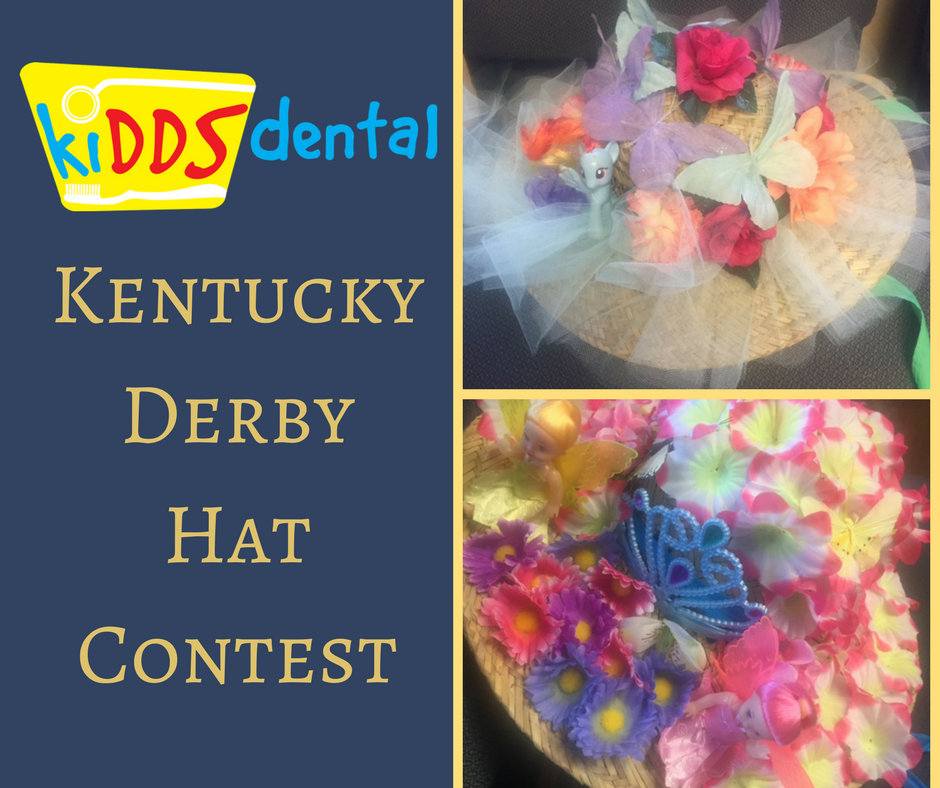
Kentucky Derby Hat Contest 2018


Facebook in no way endorses or promotes this contest. It is solely promoted by KiDDS Dental. 

Win a lunch for your team!  Participate in the KiDDS Dental Kentucky Derby Hat Contest!

How to participate . . .

1. Contact Jaymie@GrowUpSmiling.com to reserve your official KiDDS Dental Kentucky Derby Hat.
2. Decorate your hat.
3. Take a digital picture of your hat and email it to Brandie@GrowUpSmiling.com, making sure to note the name of your organization. 
4. Get votes! Each "like" or "love" your hat gets in our "Kentucky Derby Hat" album will earn your organization one vote.


Some ideas to get votes:

  • Make a small sign to display with your hat explaining the contest and directing your patrons to "like" the picture on the KiDDS Dental Facebook page.
  • Post a link to the contest picture, from the KiDDS Dental Facebook page, to your organization's Facebook page and ask your fans to vote.
  • Include a link to the picture of your Kentucky Derby Hat in your company's e-newsletter.
  • Ask your team to share the picture on their personal Facebook pages.


Voting for the KiDDS Dental's "Kentucky Derby Hat" photo contest begins April 30, 2018 and ends at 5:00 pm, May 5 2018.  By submitting a photo, each entrant agrees to the rules and states that they are 18 years or older. 
Who may enter: A member of the staff for invited businesses may enter on behalf of their business.  KiDDS Dental will determine the eligibility of each photo submitted at its sole discretion.
What to enter: A picture of the provided hat that is decorated. 
Photos that violate or infringe upon another person's rights, including to but not limited to copyright, are not eligible. 
By entering the contest, entrants grant KiDDS Dental license to display, distribute, reproduce photographs. 
Judging:  Winner will be chosen by a popular vote.
Prize:  The picture of the hat with the most reactions on Facebook will be the winner. The office that submits the winning photo will earn a catered lunch for the team, up to twenty people. 

Friday, March 16, 2018

Guard Your Child’s Mouth During Sports

Guard Your Child’s Mouth During Sports

Does your child participate in a contact sport such as football, boxing, hockey, lacrosse or rugby? If so, you can greatly reduce the risk of traumatic injury to your child’s mouth by having him or her wear a mouthguard while playing and practicing. In fact, experts recommend mouthguards for youth involved in noncontact sports, such as gymnastics or recreational activities, that might pose a risk of injury to the mouth.

Also known as a gum shield, a mouthguard helps cushion any impact to the mouth, reducing the chances of trauma to the teeth, gums and lips. A participant who does not wear a mouthguard during a contact sport is 60 times more likely to sustain an injury to the teeth than someone who wears one. A coach could—and should—keep your child from playing or practicing without a mouthguard.

Mouthguards come in three varieties:
  • ready-made mouthguards purchased at a drugstore or athletic equipment store
  • boil-and-bite mouthguards that, when softened after heating, conform to the shape of your child’s mouth
  • custom-made mouthguards from impressions we take in the office
Custom-made mouthguards are generally considered the safest, most comfortable option. For some families, however, the cost may be a factor in their choice. If you decide to purchase a mouthguard elsewhere, we will still be happy to talk to you about the other available options. You need to select a mouthguard that is not only resilient and protective but that fits properly so your child is comfortable when wearing it. 

To get the most out of your investment, have your child rinse the mouthguard before and after each use. Caution your child to avoid chewing or biting on it, and don’t let him or her share it with others. Keep the mouthguard out of hot water and direct sunlight, which can distort its shape. Finally, be sure your child wears it every time he or she plays a sport, including during practices.


If your child is involved in a recreational activity or contact sport that involves risk of injury to the mouth, be sure to discuss appropriate safety measures with Dr. Jared at your next appointment. We can review options with you and help you select the best one. Whatever option you choose, be sure to bring your child’s mouthguard to his or her next appointment at KiDDS Dental so we can evaluate its fit and effectiveness.

Give us a call at (509)-891-7070 to schedule today!

Friday, March 2, 2018

Exterminating Sugar Bugs

Exterminating Sugar Bugs

Has your child ever asked you if there are “sugar bugs” in their food? If they have, chances are they have recently been given a lesson on plaque. “Sugar bugs” are a popular teaching tool used by dentists to help children learn about the dangers of plaque. Children are easily confused by discussions of “invisible films of food particles and bacteria that latch on their teeth,” but they are certainly aware of bugs and that they don’t want them in their mouths.

The image of “sugar bugs” eating away at their teeth isn’t far from the truth. Deposits of sugar and carbohydrates mix with the bacteria in the mouth to produce a thin layer of film called plaque on the teeth. If that plaque is not cleaned away by brushing twice a day and flossing at least once a day, it interacts with further sugar and carbohydrates, creating acids that cause holes in the teeth—cavities. That allows more acids to weaken the tooth from the inside. Weak teeth cause pain and run the risk of literally breaking apart.

So use this fear of sugar bugs to your advantage in helping your children take care of their teeth.
  • Eating healthily will stop the sugar bugs from getting into their mouths.
  • Brushing twice a day and flossing at least once a day will keep those sugar bugs away from their teeth.
  • Coming in to KiDDS Dental twice a year will get rid of whatever sugar bugs they may miss.

When children grow up and learn the truth about what’s going on in their mouths, they might find the idea of sugar bugs a little silly, but their healthy gums and bright smiles will justify the fairy tale.

Give us a call at (509)-891-7070 to schedule an appointment today!

Friday, February 16, 2018

Expecting? Mom’s Healthier Mouth Means a Healthier Child

Expecting? Mom’s Healthier Mouth Means a Healthier Child

Keeping teeth and gums healthy is always important, yet many pregnant women ignore dental visits as they become wrapped up in other health care demands of pregnancy. Disregarding regular dental care during pregnancy poses risks not only to the mother but also to the child she’s carrying.
Research has indicated a possible link between gum disease in pregnant women and low birth weight, gestational diabetes, preeclampsia and preterm birth. While those relationships have not been conclusively proven, there is strong evidence that keeping your teeth and gums healthy while pregnant poses no harm to the baby and is a key component in counteracting some of the negative effects pregnancy can have on oral health.
How does pregnancy affect the teeth and gums?
  • Hormonal changes that occur during pregnancy can increase a woman’s risk for cavities as well as cause gum inflammation.
  • So-called pregnancy gingivitis—a mild inflammation of gums that occurs during pregnancy—affects as many as one third of all pregnant women.
  • Tooth decay and enamel erosion may also increase as a result of changes in diet, along with nausea and vomiting.
  • Tooth and gum disease is also associated with heart disease, respiratory illness and diabetes in the mother, all of which can affect your child while still in the uterus.

If these reasons are not enough to encourage you to maintain dental care during pregnancy, consider this: Studies also have shown that mother-to-child transmission of bacteria through transference of saliva is the primary cause of cavities in young children. This means that when your mouth is healthier and fewer harmful bacteria are present, the risk of your child’s developing cavities is significantly lower. Taken altogether, keeping your own teeth and gums healthy during pregnancy is a safe, simple way to improve your child’s overall health, both before and after birth.
Call us to schedule an appointment for your child today!  (509)-891-7070.